
As the Lands Between continue to be meticulously explored years after its initial release, the colossal, sealed colosseums of Elden Ring remain among the game's most enduring enigmas. Located in Limgrave, Caelid, and Leyndell, these imposing structures stand as tantalizingly inaccessible monuments on the map, their grand exteriors hinting at epic battles within that players have never been able to join. For a game where almost every visible landmark holds a secret or a boss, their persistent inactivity has fueled endless speculation within the community about their original purpose and future potential.
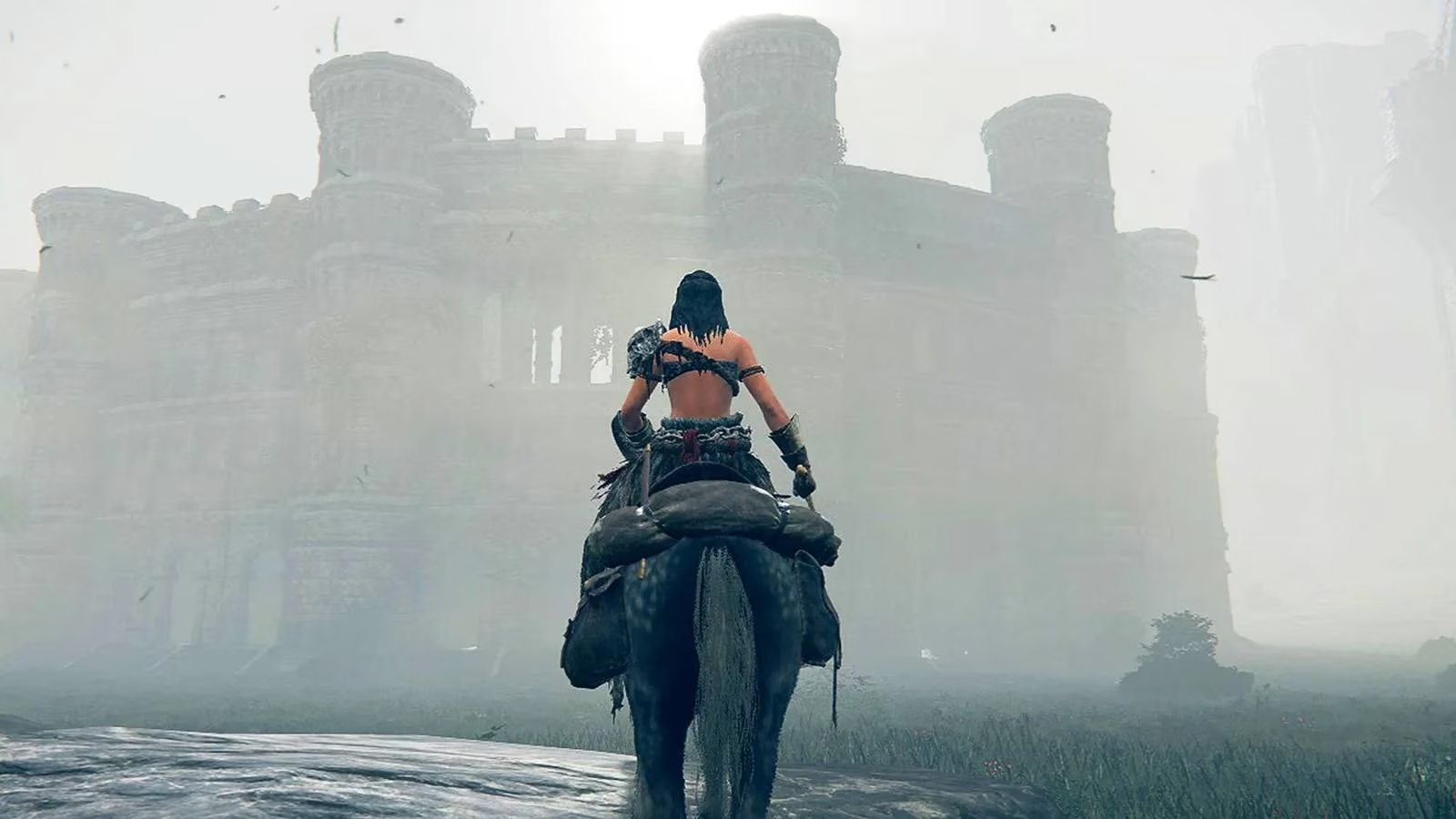
The mystery took a significant step toward resolution when dedicated dataminer and YouTuber Sekiro Dubi delved into the game's underlying architecture using DSMapStudio, a fan-created map editor for FromSoftware titles. This deep dive revealed technical evidence strongly suggesting the colosseums were designed as gladiatorial battle arenas. Within the digital frameworks of these structures, Dubi uncovered placeholder elements not present in the live game, including non-rendered "dummy" enemy characters and even internal markers for Sites of Grace. This data paints a compelling picture of arenas where the Tarnished would have faced waves of varied combatants, a concept that appears to have been fully planned but ultimately not implemented in the final release.
🔍 What the Files Reveal
Sekiro Dubi's analysis points to several key findings:
-
Non-Rendered Enemy Placeholders: These "dummy" entities are commonly used by developers to mark spawn points for planned encounters.
-
Internal Grace Points: Hidden markers for Sites of Grace within the arenas suggest planned rest/respawn functionality.
-
Complex Arena Layouts: The internal geometry supports dynamic, multi-phase combat scenarios rather than a single boss room.
This discovery has reignited discussions about the future of Elden Ring. The sheer scale and detailed design of the colosseums make it highly unlikely they were created without a concrete purpose. Given FromSoftware's celebrated history of expanding its games through narrative-rich DLC—such as Dark Souls' Artorias of the Abyss—the community's leading theory posits that these arenas are being held in reserve for future content.
⚔️ A Legacy of Arena Combat
FromSoftware is no stranger to structured PvP and challenge arenas. The Artorias of the Abyss DLC featured the Battle of Stoicism, a dedicated PvP colosseum. Furthermore, Dark Souls III's Undead Match provided a formalized duel system. The framework for integrating such features into Elden Ring appears to have been laid with these colossal structures. Sekiro Dubi has even speculated that DLC could utilize these arenas for a narrative set before the events of the main game, perhaps depicting the gladiatorial contests of the Golden Order's heyday, offering a fresh historical perspective on the Lands Between.
However, the path forward isn't entirely clear. Implementing these arenas now presents a unique challenge. Would they serve as:
-
Narrative PvE Gauntlets? Epic, repeatable challenge runs against curated enemy sets for unique rewards.
-
Dedicated PvP Hubs? Formalized duel zones with ranking systems, solving the sometimes-inconsistent invasion mechanics of the open world.
-
A Hybrid Mode? A new asynchronous multiplayer feature blending PvE and PvP elements.
Each option represents a different direction for the game's evolving post-launch life. The presence of these fully modeled but inactive spaces speaks to a grander original vision for the game's endgame or multiplayer components, a vision that may yet be realized. As of 2026, with the game's world still actively populated by players, the community's hope for an official unveiling of the colosseums remains high. Whether as a monument to cut content or a promise of battles to come, these silent arenas continue to stand as one of Elden Ring's most fascinating unfinished symphonies.