
Nobody expected the Lands Between to be this ridiculous. When FromSoftware and George R.R. Martin first teased Elden Ring, visions of a grim, sprawling dark fantasy danced in everyone's heads. A world of shattered demigods, cosmic horrors, and cryptic lore just waiting to be dissected by dedicated fans. What no one saw coming was an official manga adaptation that tosses all that brooding gravitas out the window and replaces it with pure, unfiltered goofiness. Yet here we are in 2026, and Elden Ring: Road to the Erdtree keeps proving that even the most solemn epics can inspire side-splitting laughter.
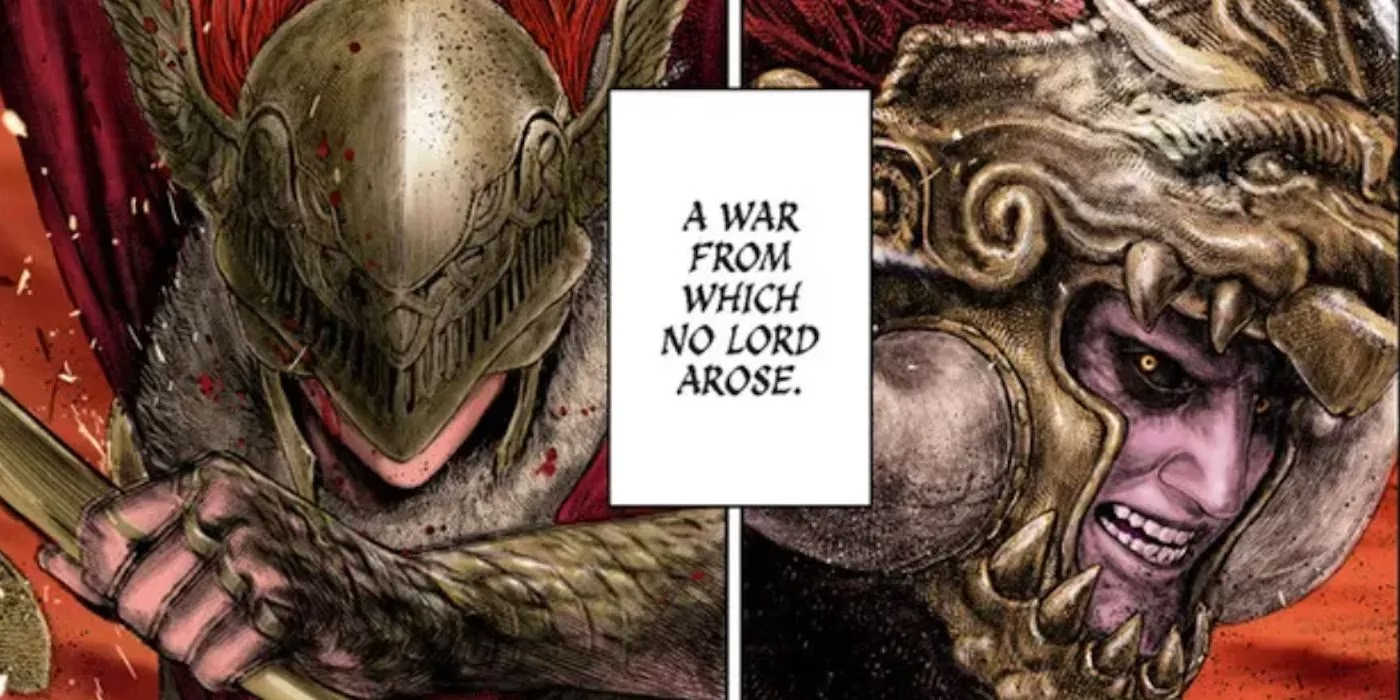
For anyone who has ever screamed in frustration at a boss fight, this manga feels like a warm, slightly unhinged hug. The story follows a Tarnished warrior—simply called “the Tarnished” in that classic Souls tradition—as he bumbles through the Lands Between on a quest to become Elden Lord. But forget noble oaths and tragic sacrifice. Our hero is more likely to trip over his own sword, get flattened by a wandering giant, or accidentally aggro every enemy in a ten-mile radius. It’s the kind of slapstick chaos that every player has experienced firsthand, now immortalized in ink.
The genius of Road to the Erdtree lies in how faithfully it captures the accidental comedy of FromSoftware games. Anyone who has played Elden Ring knows the drill. You spend ten minutes carefully sneaking past a dragon, only to roll off a cliff at the last moment. You perfectly dodge a boss’s devastating combo, then get killed by a stray goat. The game’s notorious difficulty creates a thousand tiny tragedies that, in retrospect, are absolutely hilarious. The manga leans into that shared memory. One chapter might see the Tarnished attempting to cheese a boss with poison arrows for forty pages, while another revolves around him getting repeatedly pancaked by the Tree Sentinel because he refuses to come back later. It’s pain, but the funny kind.
What makes the entire project even more surprising is its legitimacy. This isn’t a fan-made parody sketch; it’s an officially licensed adaptation published in ComicWalker and blessed by the powers that be at FromSoftware. The original Elden Ring story, co-crafted by George R.R. Martin, is a dense tapestry of demigod dynasties, shattered runes, and the enigmatic Marika. There’s deep lore about Radagon’s dual identity, the curse of Malenia’s scarlet rot, and the schemes of Ranni the Witch. Road to the Erdtree, however, takes all that rich backstory and uses it mostly as setup for punchlines. Instead of solemn exploration of Marika’s fractured rule, you get panels of the Tarnished accidentally insulting Melina or mistaking Ranni’s doll form for a lost baby and trying to find its mother.
This lighthearted approach has sparked two distinct reactions. Some lore purists initially grumbled that a proper serious adaptation, or even a canonical lore book, would better serve the community. After all, Elden Ring’s story is famously obscure. Much of it is hidden in item descriptions, environmental clues, and cryptic NPC dialogue. A beautifully illustrated tome dissecting the Golden Order, the Night of the Black Knives, and the true nature of the Erdtree would be a collector’s dream. And honestly, that hope still exists. In 2026, fans continue to clamor for an official Elden Ring compendium alongside each new volume of the manga. But the comedy has carved out its own vital niche. It acts as a pressure valve. After hours of dying to Malenia’s Waterfowl Dance or getting sniped by lobsters in Liurnia, reading about a cartoon Tarnished suffering the same fates triggers a strange catharsis. His failures mirror our own, and suddenly our ten thousand runes lost to gravity don’t sting quite as much.
The art style itself is a perfect vehicle for this humor. Characters are rendered with exaggerated expressions. The Tarnished wears standard knight armor but his helmet often pops open to reveal a perpetually panicked face. Bosses like Godrick the Grafted look appropriately grotesque but are reduced to absurd scenarios—imagine the lord of Stormveil chasing our hero around a pillar for three consecutive pages while screaming about forefathers. Even Radahn, the colossal Starscourge, gets the comedy treatment. In the manga, his legendary festival of combat becomes less a solemn rite and more a chaotic multiplayer session where everyone shows up late, clips through the ground, and spams emotes. It’s almost a documentary of the online experience.
The manga’s ongoing serialization has also kept pace with the community’s evolving relationship with the game. By 2026, most active players have memorized boss patterns and discovered every hidden wall, yet the manga finds fresh material in the same old struggles. It pokes fun at the obsession with “meta” builds. One storyline involves the Tarnished respec’ing his stats a dozen times at Rennala’s chamber, only to end up with a severely unbalanced abomination that dies in two hits. Another mocks the elaborate multiplayer summon signs by having the Tarnished summon a helper who immediately starts teabagging the environment. These are jokes that resonate deeply with anyone who’s spent time in the Lands Between.
There is also a strange tenderness beneath the slapstick. The Tarnished’s relationship with Melina, the mysterious maiden, is portrayed as a long-suffering partnership. She offers him accord and the ability to level up, but must repeatedly watch him make catastrophic decisions. Her deadpan reactions to his antics have become a fan-favorite running gag. In one memorable panel, after the Tarnished spends an entire chapter attempting to befriend a Runebear under the delusion that it’s a lost noble, Melina simply stares at the reader with the unspoken question of whether maidenhood was really worth this.
What started as a quirky experiment has blossomed into a beloved companion piece. Road to the Erdtree doesn’t replace the epic scale of the game but enhances it by celebrating the community’s shared laughter. It reminds us that even the most grandiose artistic vision is still, at its core, a game where sometimes you get kicked off a horse by a goat. And in 2026, as fans eagerly await whatever next twist the Lands Between may offer—be it a DLC expansion or a surprise sequel—this wacky manga continues to deliver consistent joy.
-
Why the comedy works: It mirrors the actual player experience—triumph and catastrophe in equal measure.
-
Love from lore lovers: Many still wish for a deep lore book, but accept the manga as a humorous side dish.
-
Ongoing adventures: New chapters release regularly, covering areas from Caelid to the Mountaintops of the Giants, each with a fresh batch of disasters.
-
Community connection: Memes from the manga frequently appear on forums, proving it has become part of Elden Ring culture.
So, if you’ve ever wanted to see a demigod trip over his own cape or watch a Tarnished try to barter with a merchant using boiled prawn as currency, Elden Ring: Road to the Erdtree is exactly where you should look. It’s a testament to the fact that even in a shattered world, humor finds a way. And honestly, after the thousandth “You Died” screen, we all deserve to laugh.