
As a Tarnished who has wandered the Lands Between since the gates of the Colosseums swung open, I've spent countless hours testing my mettle in these new arenas. The free update that arrived a few years back truly transformed the experience, didn't it? FromSoftware finally delivered the dedicated PvP battlegrounds we had longed for, weaving them seamlessly into the vast open world. But stepping into the grand rings of Limgrave, Leyndell, or the foreboding Caelid Wilds is a different beast entirely from conquering the story's demigods. Here, your greatest weapon isn't just your build or your reflexes—it's your choice of Spirit Ash. The old strategies from the campaign often fall flat against cunning human opponents. So, what separates a victorious summoner from a defeated one in the heat of arena combat?
The Mimic Tear's PvP Paradox: A Costly Copycat
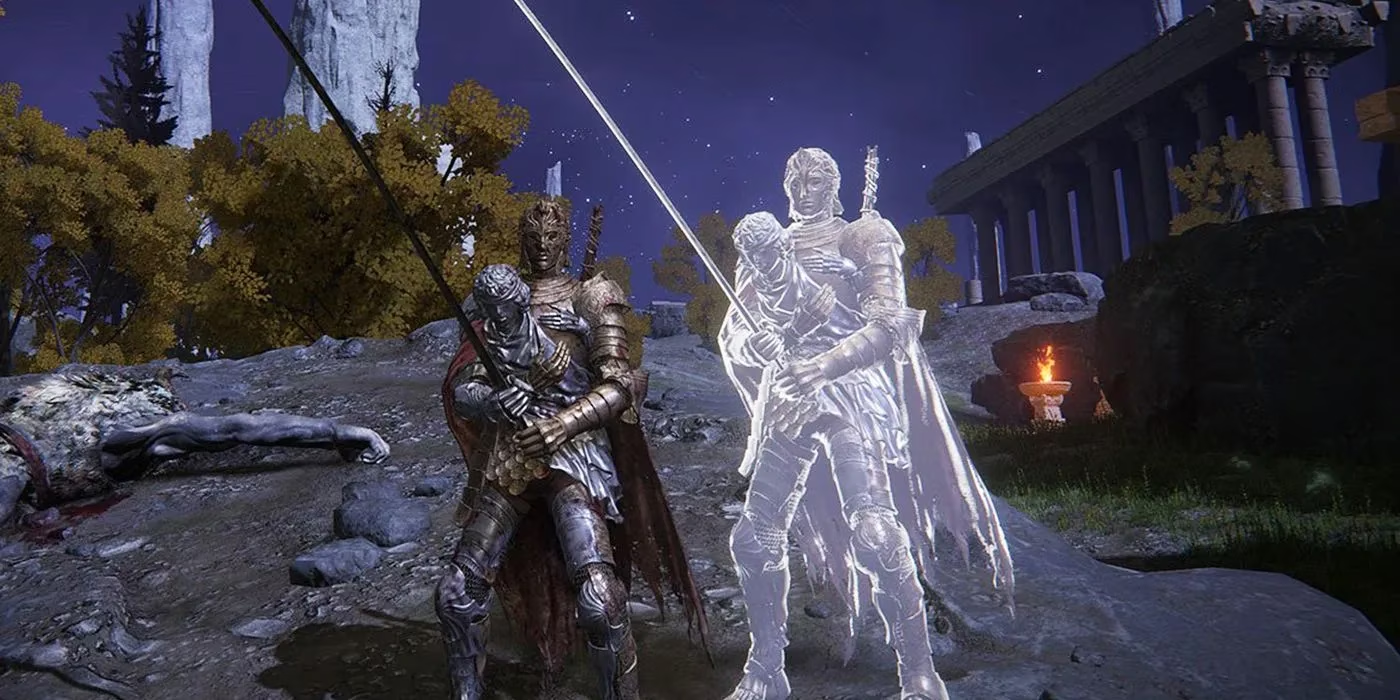
In my solo adventures, the Mimic Tear was my trusted companion, a perfect copy that could turn the tide against the most fearsome bosses. It seemed like the obvious choice for the Colosseum, right? Summon a second version of myself and overwhelm my opponent with double the firepower. However, I quickly learned this was a flawed assumption. The Mimic Tear, for all its power in PvE, reveals critical weaknesses in player-versus-player skirmishes.
First, its AI, while competent against predictable AI enemies, is no match for the adaptive, unpredictable mind of another player. Your clone becomes a predictable echo, its moves telegraphed and its damage output reduced, making it easy for a savvy opponent to outmaneuver or ignore. More crucially, the summoning cost is a severe tactical handicap. That 660 HP sacrifice isn't just a number; it's a precious Crimson Tear Flask you must immediately use to recover, putting you at a resource disadvantage from the very start of the match. In the fast-paced, resource-managed environment of the Colosseum, starting a fight already down a heal can be a death sentence. The Mimic Tear taught me that the best PvP summons aren't always the most powerful ones from the story.
Defensive Bulwarks: Mob-Type Spirit Ashes for Area Control
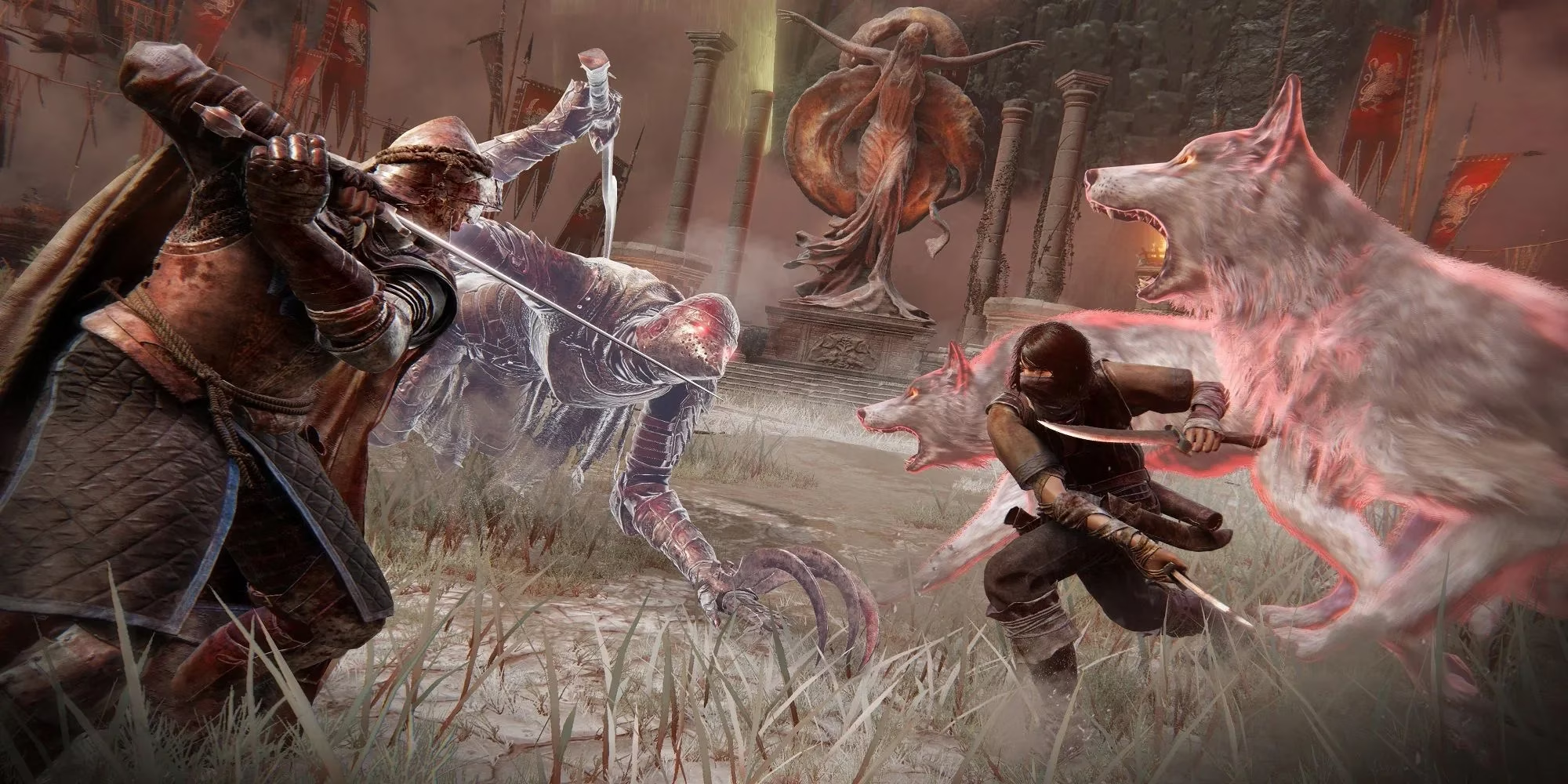
Have you ever faced an opponent who just won't let you get close, pelting you with Glintstone pebbles or arrows from across the arena? Or perhaps you're the one employing such tactics. This is where mob-type Spirit Ashes shine as brilliant defensive tools. Their individual units might be weak, but their strength lies in numbers and disruption. I've used them to create moving walls, buying precious seconds to cast a spell, drink a flask, or reposition.
Consider the Greatshield Soldier Ashes from Nokron. These stalwart spirits don't just block paths; their frost pots provide unexpected ranged pressure, slowing aggressive foes. Then there are the Mausoleum Soldier Ashes, whose erratic teleportation across the battlefield makes them incredibly frustrating for an opponent to pin down and eliminate. They don't need to deal massive damage; their role is to break the enemy's focus, turning a straightforward duel into a chaotic skirmish where you control the tempo. They act as the perfect distraction, allowing you to set up your own attacks from safety.
Aggressive Supports: Long-Range and Legendary Spirit Ashes
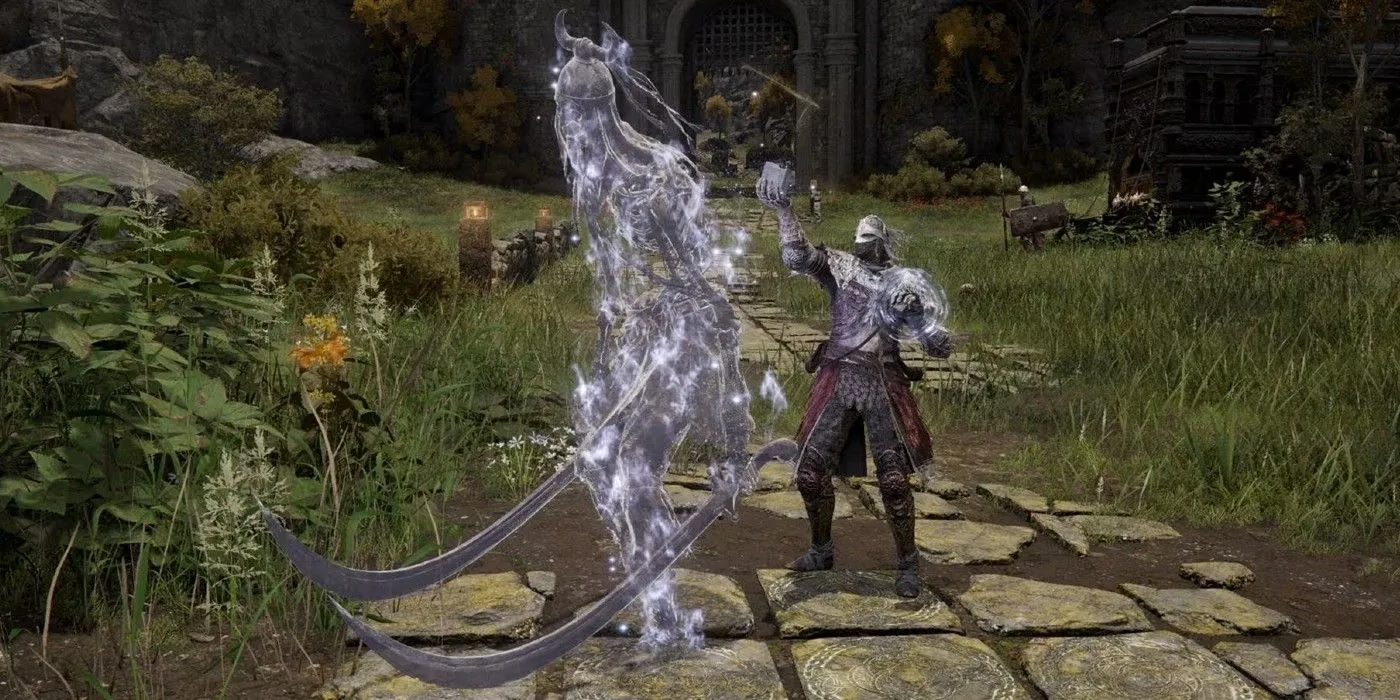
My playstyle often leans into aggressive, close-quarters combat. But charging headlong into an enemy Tarnished while their Spirit Ash pelts you from afar is a quick way to end up back at a Site of Grace. To support a rush-down strategy, your summon needs to keep pace and apply pressure. This is the domain of ranged attackers and the mighty Legendary Ashes.
For consistent ranged harassment, few match Latenna the Albinauric. Once positioned, she becomes a stationary turret with an astonishing range, forcing opponents to constantly dodge or seek cover. Other excellent choices include:
-
The Page & Ancestral Follower: For mobile archery.
-
Glintstone Sorcerer / Twinsage Sorcerer: For magical barrages.
Yet, the true game-changers in a sustained fight are the Legendary Spirit Ashes. Yes, their FP cost is high, but their impact is monumental. Summons like Black Knife Tiche with her destined death flames, Lhutel the Headless with her teleporting spear throws, or Ancient Dragon Knight Kristoff with his thunderous attacks are more than allies—they are secondary bosses your opponent must contend with. They are durable, deadly at all ranges, and possess special abilities that can punish even the most evasive players. Bringing one into the Colosseum signals a commitment to all-out warfare.
The Unsung Heroes: Low-Cost Spirit Ashes for Ultimate Flexibility
But what if your strategy is pure adaptability? What if you don't want to commit 100+ FP at the match's start? This is the subtle art of the low-cost Spirit Ash, and in my experience, it's a philosophy that leads to some of the most dynamic and satisfying victories. These summons are tools for specific moments, held in reserve until the perfect opportunity arises.
The champion of economy is, without a doubt, the Giant Rat Ashes. At max upgrade, it summons five rats for zero FP and zero HP. They are pure, disposable chaos. Need a momentary screen to run and heal? Drop the rats. See your opponent at low health and trying to create distance? The rats can finish the job. Other fantastically low-investment options include:
| Spirit Ash | FP Cost | Key Trait |
|---|---|---|
| Stormhawk Deenh | 47 FP | Agile buff-giver |
| Rotten Stray | 35 FP | Inflicts Scarlet Rot |
| Skeletal Militiamen | 44 FP | Can resurrect |
| Soldjars of Fortune | 185 HP | Explosive suicide bombers |
These spirits allow for reactive play. You can enter the duel focusing purely on your opponent, only summoning when you need to flip the script—to harass a fleeing foe, to defend a critical position, or to exploit a momentary opening. Their low cost means summoning them is rarely a catastrophic loss, making your strategy unpredictable and hard to counter. In the ever-evolving meta of the Colosseum, sometimes the smallest, cheapest spirits offer the greatest tactical freedom.
Reflecting on my time in the arena, the lesson is clear: success is not about finding the single "best" Spirit Ash. It's about synergy. It's about aligning your summon with your build, your playstyle, and the map. The Caelid Colosseum, with its Spirit Ash allowances, has become a laboratory of endless combinations. Will you bring a legendary warrior to dominate, a swarm to confuse, or a cheap tool to outmaneuver? The choice, Tarnished, is yours to make in the heat of battle.