
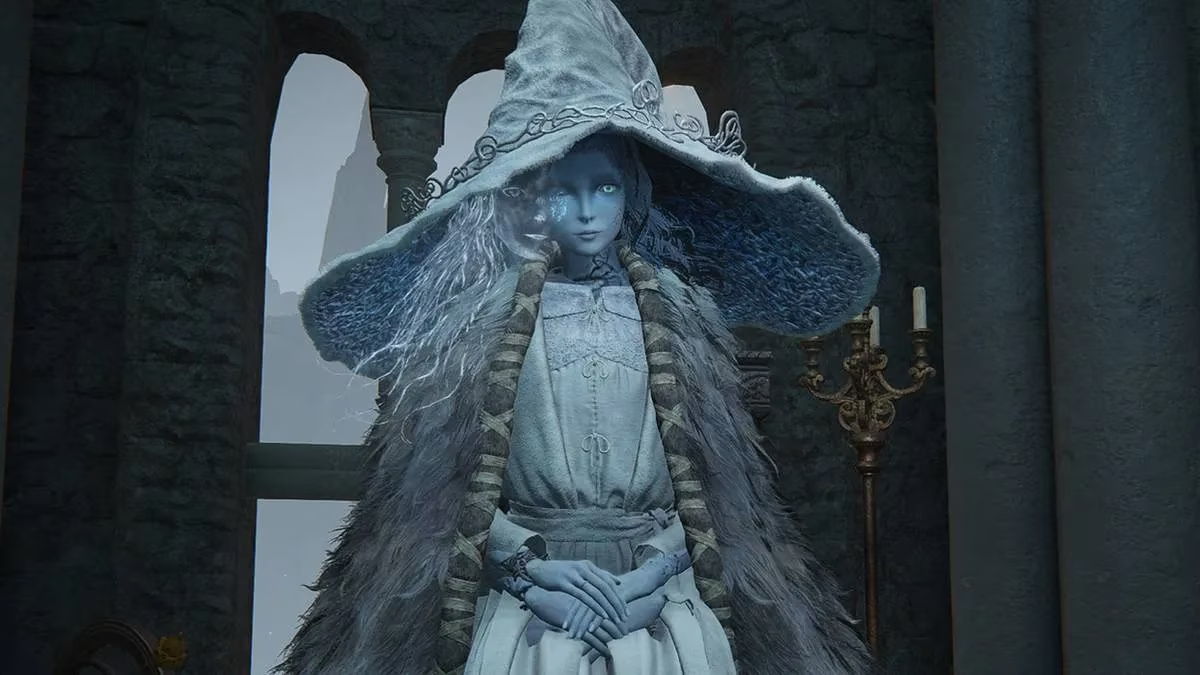
In the grand, sprawling, and often bewildering tapestry of the Lands Between, few figures cut as memorable a silhouette as Ranni the Witch. Picture this: a four-limbed doll with skin the color of a winter sky and a voice that carries the weight of cosmic rebellion. She’s not your average maiden in a tower; she’s a runaway princess, a soul trapped in a puppet’s body, and the architect of a plot to topple the very gods. For the Tarnished stumbling through 2026, her questline remains one of the most compelling narratives in FromSoftware’s masterpiece, Elden Ring. Her story isn't just about becoming Elden Lord; it's about challenging the script the universe handed her and, frankly, tearing it to pieces.
A Princess Born from Conflict
Ranni’s tale is woven into the very foundation of the Lands Between. Long ago, two mighty houses stood in opposition: the golden, life-giving House of the Erdtree and the enigmatic, lunar House of the Moon. When Radagon, a champion of the Erdtree, was sent to battle the Carian Queen Rennala, something unexpected happened—he fell head over heels. This unlikely union merged the warring factions and produced a brood of demi-god offspring, including the mighty General Radahn and a young girl known then as Lunar Princess Ranni. Born of both sun and moon, her destiny was seemingly written in the stars, but Ranni had other ideas. She was never one for following the family business, especially when the "business" involved being a puppet for cosmic overlords.
The Great Escape: Stealing Death and Losing a Body
The real juicy part of Ranni’s story begins with her utter rejection of the "Greater Will." This otherworldly force, communicated through its creepy, finger-wagging envoys (the Two Fingers), seeks to impose order on all existence. Ranni, with her Carian royal blood and independent streak, wanted none of it. Being chosen as an Empyrean—a potential vessel for an Outer God—was less an honor and more a life sentence. So, she hatched a plan. A wild, dangerous, and frankly messy plan.
After the Great Shattering of the Elden Ring, Ranni orchestrated the Night of the Black Knives. In a move that would make any strategist whistle in appreciation (or horror), she:
-
Allied with the shadowy Black Knife Assassins.
-
Stole a fragment of the Rune of Death.
-
Used it to simultaneously kill the soul of Godwyn the Golden and her own physical body.
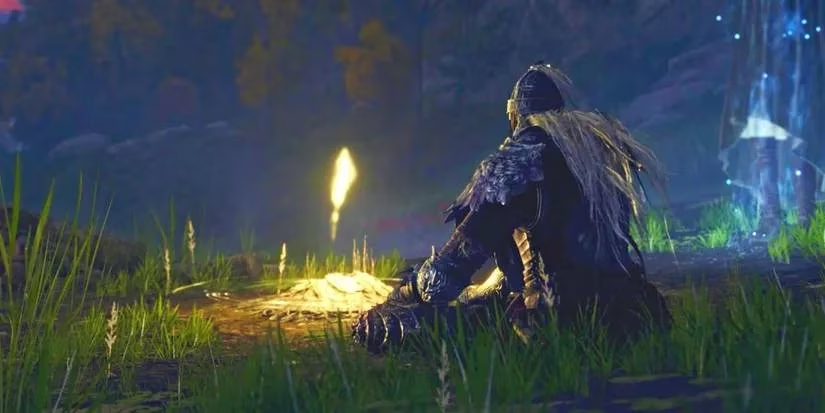
Talk about a dramatic exit! This event shattered the world's order and set the stage for the Tarnished's return. Godwyn was left a soulless husk, and Ranni... well, Ranni found herself a spirit without a home.
Life in a Dollhouse: The Blue Maiden's New Look
So, why the doll? After severing her connection to the Greater Will and her own flesh, Ranni’s spirit needed a vessel. For reasons known only to her—maybe it was handy, maybe it had sentimental value, or maybe she just has a thing for craftsmanship—she chose to inhabit a delicate, four-armed doll. This new form isn't just for show; it’s a symbol of her sacrifice and her weakened state. She traded immense power for freedom, and now she operates from the shadows of her tower, Ranni's Rise, with her loyal (and equally fascinating) crew:
-
Blaidd the Half-Wolf: Her sworn shadow and guardian, a beast of fierce loyalty.
-
War Counselor Iji: The giant blacksmith with secrets of his own, providing wisdom and forged steel.
The Tarnished can join this oddball family, aiding Ranni on her quest to permanently evict the Greater Will from the lives of mortals. It’s a quest that involves hunting down hidden treasures, facing terrifying foes, and ultimately, making a choice about the future of the world.
Lost in Translation: What Ranni Really Wants
Here’s where things get a bit... lost in the post. There’s been a notorious mistranslation in Ranni’s English dialogue that had players scratching their heads. She seemingly says her new age will bring a "chill night" and make emotions "impossibilities," which sounds, well, kind of bleak and tyrannical. Yikes, right?
But hold on! The original Japanese intent tells a different story. Ranni isn’t trying to freeze the world or strip away feeling. Her goal is to physically remove the concept of imposed Order—the Golden Order, the Greater Will—from the Lands Between altogether. She wants to take it, and herself, far away into the vastness of space, like taking out the cosmic trash. Her famous Age of Stars ending shows this: she doesn’t set herself up as a new goddess to rule from a golden throne. Instead, she becomes a distant, watchful presence, a cold but hopeful star, ensuring no god or finger can dictate the fate of humanity ever again. She’s giving the world its free will back, no strings attached. That’s a pretty solid deal, if you ask us.
A Force for Good? The Verdict on the Witch
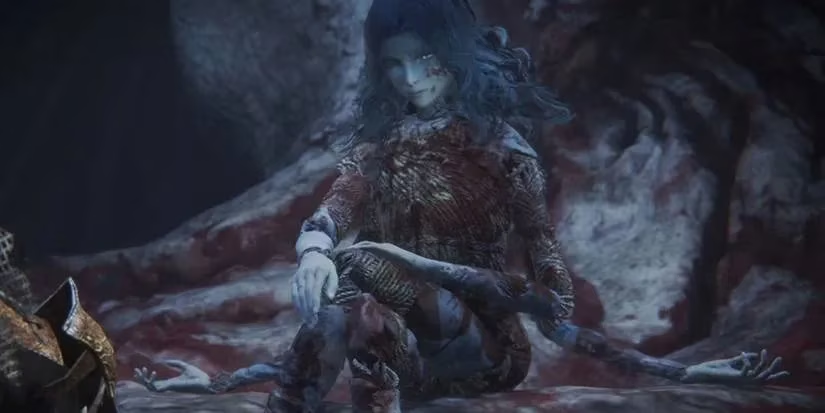
So, is Ranni a hero or a villain? The Lands Between doesn’t deal in simple labels. She caused a catastrophe, no doubt about it. The Night of the Black Knives was a tragedy that broke the world. But her endgame isn’t power for power’s sake. It’s liberation. She saw the gilded cage of the Golden Order and decided to pick the lock, even if it meant breaking the whole doorframe in the process. Her methods are extreme, but her goal—a world where people get to choose their own path, for better or worse—resonates as a fundamentally hopeful one.
In a game filled with corrupted monarchs, mad warriors, and indifferent gods, Ranni the Witch stands out as a revolutionary. She’s a puzzle, a partner, and a path to one of the game’s most intriguing conclusions. Her story, from lunar princess to soul-bound doll to star-faring savior (or liberator, depending on your view), is a testament to the rich, convoluted, and utterly captivating lore that makes Elden Ring a world players are still unraveling years later. Not too shabby for a doll with a serious attitude problem, eh?