
There have been many weapons in games that divide a community, but few have caused as much drama as the Moonveil Katana in Elden Ring. This shimmering blade, with its sorcery-enhanced attacks and devastating weapon art, became an instant icon the moment players discovered it. Even now, in 2026, veterans speak of the early days like old warriors recounting a legendary siege—one where the weapon itself was the battlefield, and a lone invader decided to take a stand.
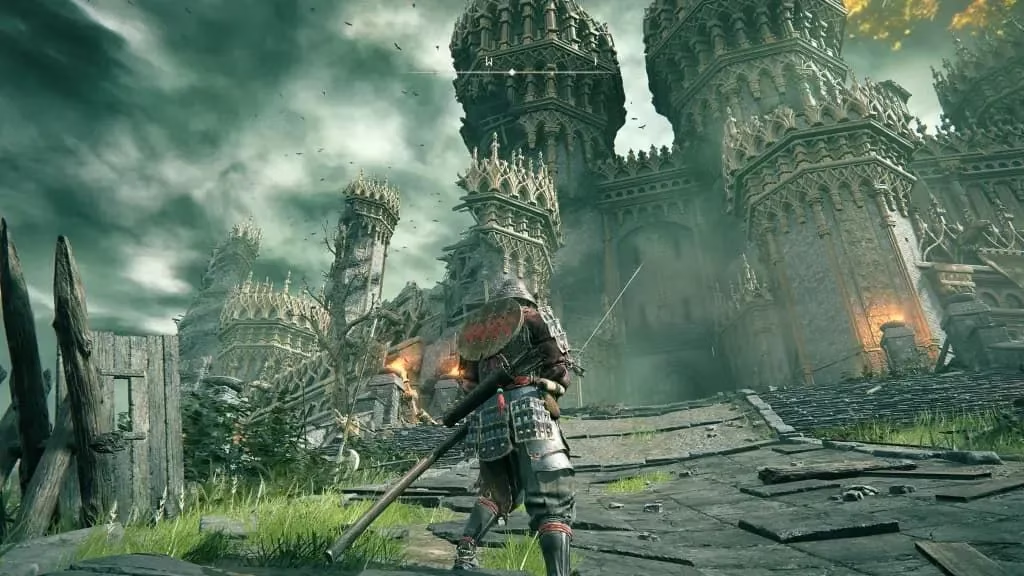
The Moonveil is not a weapon you just stumble upon while casually riding Torrent. It rests deep within the Gael Tunnel in Caelid, guarded by a Magma Wyrm that can melt unprepared adventurers in seconds. That location alone tells you everything: Caelid is a region infamous for its punishing difficulty, and the tunnel boss demands patience, pattern recognition, and a robust build. Naturally, this meant that players at Rune Level 1—the ultimate challenge runners—could never realistically wield the katana without a massive time investment. Unless, of course, someone decided to help them out.
In the game’s bustling early months, a peculiar form of philanthropy emerged. High-level players would invade or be summoned near the Church of Elleh, then drop coveted items like Moonveil +10 for freshly made characters. It was a way to give newbies a taste of power, to let them soar through Limgrave with a weapon that in normal progression would remain out of reach for hours. The community largely celebrated this generosity. But one player, going by the name Valyria, saw things very differently.
Valyria’s scheme, revealed in a viral social media post that still gets shared today, was as bold as it was divisive. They would lurk near the Church of Elleh, watch for invaders dropping Moonveil katanas for low-level hosts, and then swoop in to steal the weapon before the intended recipient could pick it up. After securing the prize, Valyria would not stash it away. They would walk over to a quiet cliffside and discard it completely. The reason? “Doing my part to make the game Moonveil-free.”
With those words, an unpredictable crusade began. Valyria didn’t just discard one blade; they made it a mission. Each drop they intercepted meant one less Moonveil in the hands of a player who, in their view, didn’t earn it. The act sparked a firestorm.
Reactions came fast and furious. Some applauded the chaos, viewing it as a kind of performance art that highlighted how broken the weapon’s poise damage was at launch. Others were less amused. The ethical line was clear to many: stealing an item someone specifically intended for another person crosses into griefing territory. One user famously tracked down the original benefactor through Reddit and delivered a new Moonveil to the intended host, effectively undoing Valyria’s purge. Comments ranged from playful jabs—“The Lands Between have a new villain”—to genuine outrage over the breach of unwritten multiplayer etiquette.
The controversy, however, couldn’t be separated from the weapon itself. To understand Valyria’s frustration, you have to remember what Moonveil could do in those pre-patch days. Its Transient Moonlight weapon art fired a horizontal wave of magic that dealt colossal poise damage. Bosses like Margit, Godrick, and even late-game threats like Malenia could be staggered in two or three hits, turning tense duels into trivial katana spam. Co-op sessions often devolved into who could fire the blue arc first. The weapon wasn’t just powerful; it was an answer to almost everything.
When FromSoftware released a patch that significantly reduced the poise damage of Moonveil, many sighed in relief. But the balance adjustment didn’t erase its legacy—or its fans. Even in 2026, you’ll see hosts dual-wielding Moonveil with another potent blade, still leaning on its reliable magic damage scaling. The katana remains a strong choice for Intelligence builds, it just no longer trivializes encounters the way it once did. Yet, somehow, that hasn’t stopped the occasional crusader.
The “Moonveil-free” movement never truly died. Every few months, a forum post pops up with a player recounting how they invaded a world, saw a dropped glowing item on the ground, and made it vanish forever. It has become a folk tale, a reminder of how personal people can get about digital loot. Valyria’s original act might have been isolated, but it tapped into a deeper sentiment: the tension between earned progression and shortcut generosity. Some want every Tarnished to suffer through Gael Tunnel, just as they did. Others just want everyone to enjoy the game their own way.
In the end, the Moonveil Katana is much more than a weapon. It’s a symbol of Elden Ring’s vast, interconnected community—where a single blade can ignite debates about fairness, kindness, and the unspoken rules of a shared world. Whether you see Valyria as a hero or a villain, one thing is certain: the Moonveil’s story continues to be written with every summon sign and discarded blade on the cliffs of Limgrave.
As players continue to explore the vast landscapes of Elden Ring, the significance of in-game items like the Moonveil Katana remains a topic of interest. The economy of virtual worlds often mirrors real-world dynamics where supply, demand, and value fluctuate based on player interactions and developer adjustments. This evolving ecosystem has sparked discussions not only about gameplay fairness but also about how players can leverage tools to enhance their gaming experience.
For those seeking to optimize their gaming journey, whether through acquiring rare items or simply keeping up with the latest patch updates, resources outside the game can prove invaluable. One such resource is this price tracking tool, which provides insights into digital market trends. While the Moonveil saga highlights the passion of Elden Ring's community, tools like these can help players stay informed and make strategic decisions, ensuring they remain at the forefront of this ever-evolving adventure.