
As I wander the Lands Between in 2026, the mysteries of this shattered realm continue to haunt me. Who was Melina truly? What forces do the Outer Gods wield? And why does Miquella slumber within that enormous egg? While we await the Shadow of the Erdtree expansion for answers, we Tarnished must piece together the fragments of lore scattered across this world. One peculiar mystery has always captured my imagination—the coffin elevators that transport us through Elden Ring's deepest, darkest places. Why would anyone use coffins as transportation? What civilization would create such a macabre travel system?
The Coffin Network: Underground Transportation
During my travels beneath the Altus Plateau and Stormveil Castle, I discovered this bizarre network of coffin elevators. The system connects several key locations:
-
Siofra Aqueduct to Deeproot Depths – The first coffin ride that truly startled me
-
Deeproot Depths to Ainsel River – A journey through ancient waterways
-
Lake of Rot to Astel's arena – The most perilous coffin journey of all
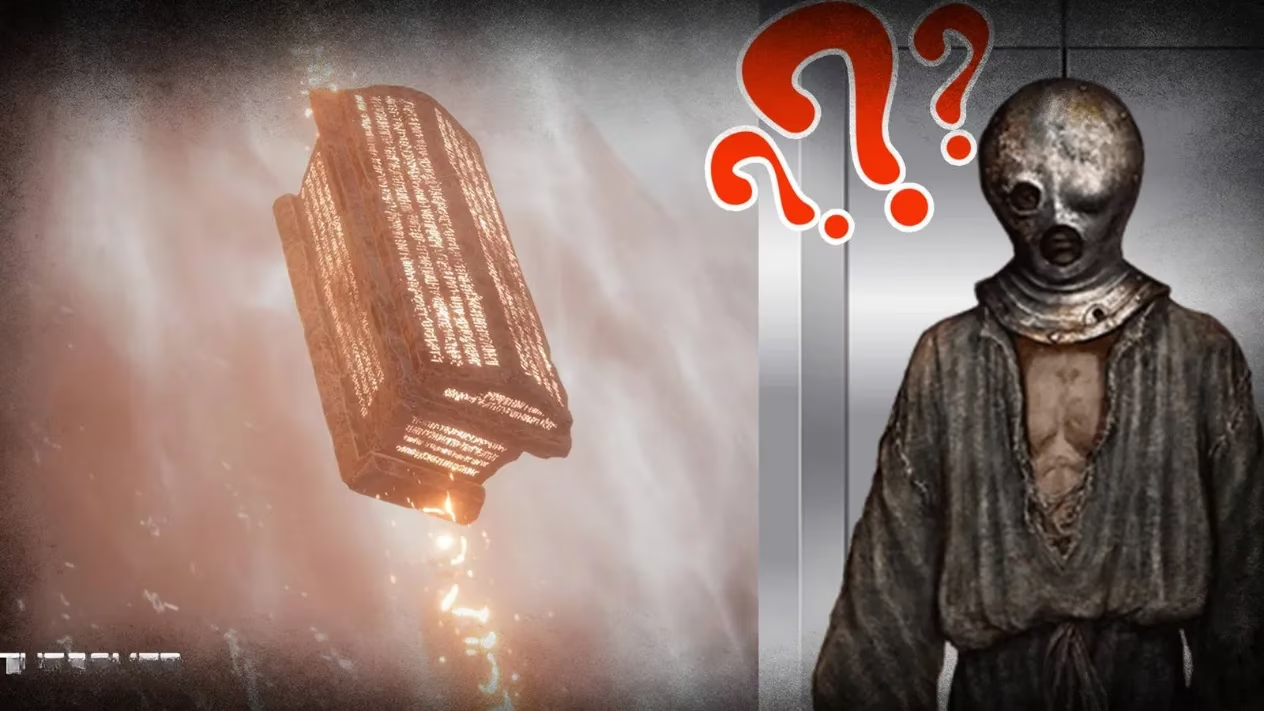
What's fascinating is how they operate. Initially, you simply strap yourself in as the coffin plunges down waterfalls. But when backtracking, the coffin magically levitates back up with glowing orange runes! This isn't just mechanical transportation—it's clearly enchanted.
The Nox Connection: Funeral Rites as Transportation
After discussing with fellow Tarnished on various forums, the most compelling theory comes from the ancient Nox civilization. The Nox (also called Night Folk or Numen) were banished underground by Queen Marika and built the Eternal Cities. Their funeral practices might hold the key to understanding these coffins.
Consider this: what if these weren't designed as elevators at all, but as funeral vessels? The theory suggests that Nox funeral ceremonies involved placing their dead in enchanted coffins that would follow underground rivers to final resting places. The magical return mechanism ensured the coffins could be reused—an efficient system for a civilization with many dead to process.
Why This Makes Sense:
-
Practicality: The Nox had massive casualties after their banishment and failed attempt to summon a star-spawn god
-
Magical Infrastructure: The glowing runes match other Nox magical artifacts
-
Geographic Logic: All coffin routes connect Nox-related areas and follow natural waterways
Cultural Significance: Death and Journey
The coffin elevators reveal something profound about Nox culture. Unlike our world where we separate transportation from funerary practices, the Nox integrated them. Their view of death wasn't as an end, but as a journey—one literally facilitated by these river-coffins.
| Coffin Route | Connected Civilizations | Possible Funeral Significance |
|---|---|---|
| Siofra to Deeproot | Nox Eternal Cities | Transport to ancestral roots |
| Deeproot to Ainsel | Multiple underground cultures | Connection between underworld realms |
| Lake of Rot to Astel | Nox and Astel worshipers | Final journey to confront a fallen star |
The Magic Behind the Mechanism
The orange glowing runes that power these coffins deserve special attention. They're not just decorative—they're functional magic that defies gravity and water currents. This suggests:
-
Advanced Understanding: The Nox possessed sophisticated magical knowledge
-
Sustainable Design: The coffins operate indefinitely without maintenance
-
Ritual Integration: The magic serves both practical and ceremonial purposes
Could these runes be related to the same magic that powered the Eternal Cities? Or perhaps they're connected to the stars the Nox so revered?
What Shadow of the Erdtree Might Reveal
As we approach the expansion's release, I can't help but wonder what new insights we'll gain. Will we discover:
-
Nox funeral texts describing the coffin rituals?
-
Workshops where these coffins were enchanted?
-
The original designers of this system?
-
Connections to other transportation methods in the Lands Between?
The expansion might finally give us definitive answers about whether these were always intended as transportation or if we Tarnished are simply repurposing ancient funeral equipment for our convenience!
Personal Reflections: Traveling in a Coffin
Riding these coffins always gives me pause. There's something profoundly eerie about traveling in what was essentially a hearse. Each journey makes me wonder:
-
How many Nox bodies traveled these same routes?
-
What ceremonies accompanied these journeys?
-
Did the Nox view the underground rivers as their Styx?
-
Are we disrespecting their traditions by using these as elevators?
Yet, there's also beauty in this system. The Nox transformed a necessity—disposing of their dead—into an elegant, magical solution that outlasted their civilization. Thousands of years later, their funeral boats still ferry travelers through the darkness.
Conclusion: More Than Just Game Mechanics
These coffin elevators represent everything I love about Elden Ring's worldbuilding. What appears as mere game mechanics contains layers of cultural and historical significance. The Nox didn't just build elevators—they created a funerary infrastructure that reflected their beliefs about death, journey, and the underground world they called home.
As I ride another coffin from Deeproot Depths, watching the glowing runes illuminate ancient stone walls, I realize we're not just using transportation. We're participating in the final rites of a lost civilization, following paths carved by grief and magic through eternal darkness. And perhaps that's the most fitting way to travel through a world where death has been broken and rebirth is possible.
The mysteries continue, but each coffin ride brings me closer to understanding the Nox—not as enemies or NPCs, but as people who faced extinction with remarkable ingenuity. Their legacy floats on, carrying Tarnished toward destinies they could never have imagined. 🪦✨