
As we find ourselves in 2026, the Soulslike genre remains one of gaming's most fascinating, and perhaps most problematic, phenomena. It's this weird little corner of the action-RPG world that's defined not just by specific mechanics, but by this whole vibe—this feeling of brutal challenge, looping levels that fold back on themselves, stories told through cryptic whispers and item descriptions, and worlds that feel like they've been left out in the rain for a century. It's a mood, a philosophy, even. And the strangest part? The whole thing is named after another studio's games! Seriously, think about that for a second. It's like if every detective novel for the last fifteen years was called a 'Sherlock-oid' or something. The only time we saw anything similar was back in the 90s with 'Doom clones,' but that label never stuck around with the same stubborn permanence.
The FromSoftware Formula: A Blueprint That's Hard to Beat
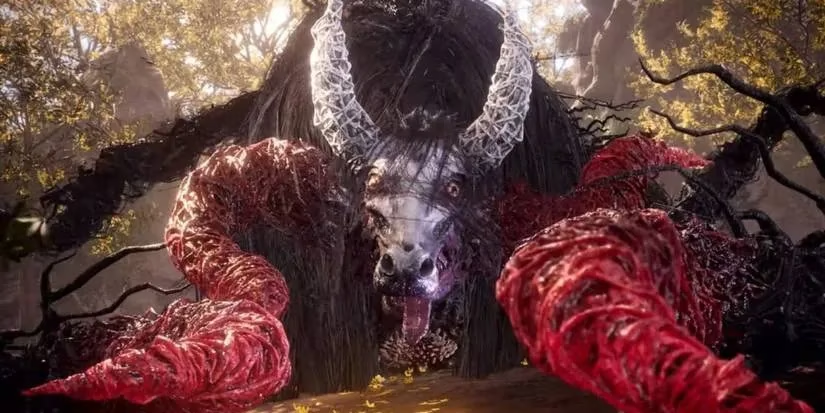
The identity of the Soulslike is inextricably tied to FromSoftware's own legendary run, from the foundational Demon's Souls back in 2008 to the genre-shattering, open-world colossus that was Elden Ring in 2022. The crazy thing is, for all the games that have tried to replicate that magic—and there have been so many—not a single one has really managed to hit that same legendary peak. On one hand, it's incredible that one studio's vision was so potent it birthed an entire subgenre. But on the other... well, it kinda feels like the genre is stuck in a rut, forever looking over its shoulder at its parents. It's like trying to write a sequel to someone else's masterpiece; you're always playing catch-up.
The Imitation Game: Struggling in the Shadow
Look at the track record of the big 3D Soulslikes that try to go toe-to-toe with FromSoft:
| Game | Notable Feature | The Verdict |
|---|---|---|
| Lords of the Fallen / The Surge (Deck13) | Limb-targeting, tech-based setting | Enjoyable but... clunky. You can feel the effort. |
| Mortal Shell | Hardening mechanic, condensed world | A solid, commendable copycat. It gets the homework right. |
| Wo Long: Fallen Dynasty | Fast-paced parry/buddy system | A fun pretender with its own flair, but still walking a familiar path. |
| Steelrising | Automaton protagonist, alt-history France | It was... fine. Just kinda... there. |
These games often toss in one or two neat ideas to say "Hey, look, we're different!"—like targeting specific limbs or having a special parry move. But the core journey, that slow, methodical, punishment-filled trek through a dying world? It's so familiar. The comparison is inevitable, and FromSoftware almost always wins. They set the rules, and everyone else is just playing their game.
The Indie Escape: Where Souls Ideas Truly Shine
Here's the twist, though. For my money, the best Soulslikes aren't the big-budget 3D ones trying to be Dark Souls 4. Nope. They're often hiding in the indie scene, where developers take those core Souls-like tenets and do something wild and new with them. They're not copying; they're remixing.
-
The Isometric Adventurers: Take Tunic. This gorgeous little fox's adventure owes as much to classic Zelda as it does to Dark Souls, wrapping its challenging combat and mysterious world in a bright, isometric package. It has its own brilliant ideas, like a manual you piece together. It's a love letter, not a photocopy. Same goes for the stunning Death's Door—it's got the weighty combat and somber tone, but with a sharper, more accessible edge and its own incredible personality.
-
The 2D Masters: Then you have the pure 2D greats. Hollow Knight is the poster child here.
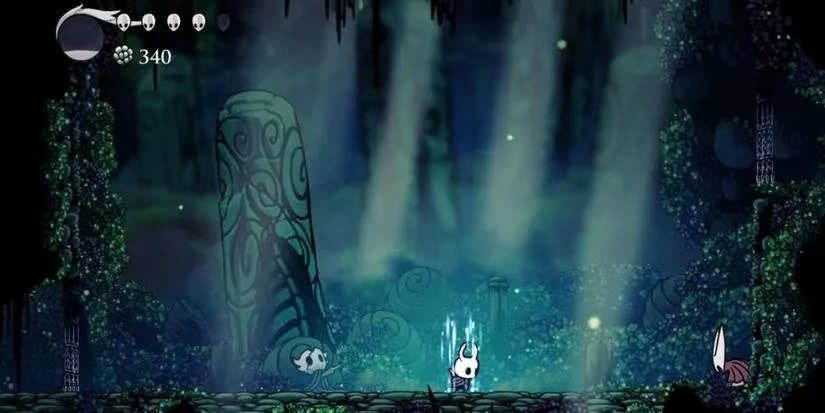
It drinks deeply from the Souls well—the consequence of death, the fragmented lore, the sprawling, interconnected map—but it's equally a masterclass in Metroidvania design and 2D platforming. Its beautiful, hand-drawn art style creates a world that's unmistakably its own. It doesn't feel like "Dark Souls but 2D"; it feels like Hollow Knight. Blasphemous does something similar, fusing punishing combat with a uniquely grotesque, religious-horror aesthetic that you'd never see in Lordran. These games work because they hybridize. They take the Souls inspiration and weld it to something else entirely, creating a new alloy.
A Path Forward: Embrace, Don't Replicate
So, what's a Soulslike to do if it wants to stand out? The lesson seems clear: don't just mimic, evolve.
-
Change the Perspective: Go 2D, go isometric, go top-down. A new camera angle forces new design decisions.
-
Find a Strong Visual Voice: Please, for the love of the First Flame, move beyond the generic "grimdark fantasy" look. Give us something with color, or a unique art style.
-
Inject Some Personality: If you're going to be a straight-up 3D Soulslike, maybe don't take yourself so seriously. A game like The Last Hero of Nostalgaia got this right by adding a layer of satire and humor about the genre itself. It's refreshing!
-
Blend Genres Boldly: The most successful "mainstream" Soulslike in recent memory might be Star Wars Jedi: Fallen Order. It didn't try to be Dark Souls; it took Souls-like combat and progression and spliced it with a cinematic, Uncharted-style adventure. It was accessible, it was fun, and it felt new.
Let's be real: the Soulslike genre exists because FromSoftware put together an absolutely killer set of ideas. Gaming is richer for it. But in 2026, with Elden Ring having blown the doors off what's possible, the bar is astronomically high. The games that truly resonate are the ones that take a spoonful of that Souls formula, but then bake their own unique cake with it. The rest? Well, they're just living in the shadow of giants. And that's a pretty dark place to be, even for a Soulslike.